Abstract Leaf Embroidery Art Design
A Designer’s First Look: Bold, Balanced, and Ready for Real Fabric
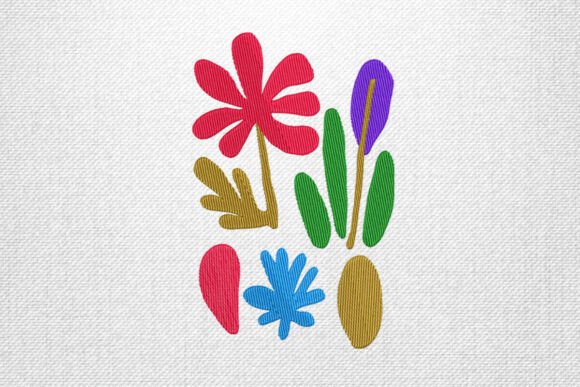
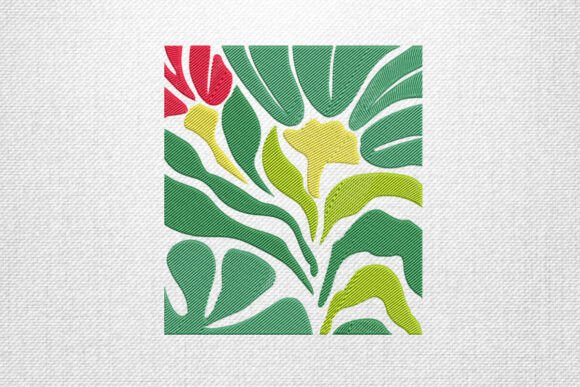
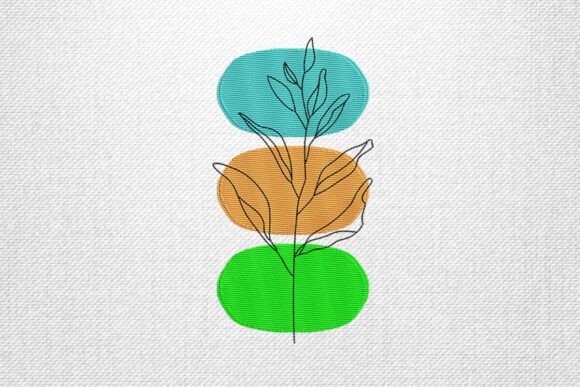
When I opened the Abstract Leaf Embroidery Art Design, my first thought wasn’t “pretty”—it was “present.” This isn’t a dainty botanical sketch or a literal leaf silhouette. It’s confident abstraction: fluid negative space, deliberate asymmetry, and a color story that leans into contrast—bold blue, warm orange, and fresh green—without shouting. As a designer who’s stitched hundreds of single-flower and nature-adjacent motifs, I appreciate how this design avoids cliché while still feeling instantly recognizable as *leaf*. It lands somewhere between modern wall art and wearable art—and that versatility is its strongest asset.
How It Performs on Real Projects (Not Just Screens)
I tested the Abstract Leaf Embroidery Art Design on three real-world items: a medium-weight cotton tote bag, a midweight French terry sweatshirt, and a linen-cotton pillow cover. On the tote, it stitched cleanly at 4.5” wide—no puckering, no thread nesting. The satin stitch edges held crisp definition against the fabric texture, and the fill stitch areas stayed breathable, not stiff. On the sweatshirt, I used tear-away + cut-away stabilizer combo, and the design retained its graphic punch without sinking into the nap. That’s rare for abstract shapes with curved contours.
For small business use? It shines in boutique merchandise. I mocked it up on an apron for a local herbalist shop—it read beautifully at 3.75”, kept its personality, and felt intentional, not generic. As a machine embroidery design for Etsy sellers, it’s gift-ready: pairs well with neutral apparel, reads well in printable mockups, and translates across categories—baby embroidery (on a soft organic cotton onesie), holiday embroidery (stitched in metallic gold thread on a velvet stocking), or wedding gifts (subtle on a linen tea towel).
Where to Use It Thoughtfully—Not Everywhere
This design is expressive, but it’s not universally forgiving. On stretchy fabric like jersey or ribbed knits, I recommend testing the Abstract Leaf Embroidery Art Design with light cut-away stabilizer and reduced top tension—those bold curves can distort if the base fabric gives too much. On dark fabric, the orange and green pop, but the blue may recede unless you use high-contrast thread (e.g., navy on black, not royal blue). And avoid hooping it smaller than 3.25”: fine interior lines and tight curve transitions lose clarity, especially in dense fill stitch zones.
Curved surfaces like caps or structured hats? Proceed with caution. The design’s open negative space works best on flat or gently contoured areas—think front chest, center back, or pillow face—not crown seams or brim curves. Likewise, layered garments (like quilted jackets) or textured fabrics (bouclé, heavy corduroy) will mute the sharpness of those satin stitch outlines. If you’re planning an embroidered patch, consider simplifying one inner detail or widening a gap slightly—it’ll hold up better through heat-sealing and laundering.
What It Adds to Your Finished Product—Beyond Aesthetics
The Abstract Leaf Embroidery Art Design quietly elevates perceived value. Customers don’t just see a leaf—they sense intentionality, craftsmanship, and contemporary taste. On custom apparel, it signals that the maker understands balance: enough detail to feel handmade, enough openness to avoid visual fatigue. For craft businesses, it supports brand consistency when paired with complementary neutrals—think charcoal tees, oatmeal totes, or sage-green pillow covers.
It also builds trust. Because the motif is abstract—not overly literal or cutesy—it appeals across age groups and aesthetics. A millennial customer sees gallery-worthy wall art; a parent buying baby embroidery sees gentle modernity, not kitsch. That broad resonance makes it safer for small shop products, holiday embroidery bundles, or curated digital embroidery file collections where buyer expectations vary widely.
Practical Notes Every Designer Should Check Before Stitching
- Test on scrap fabric first—especially if using textured, dark, or stretchy material. See how the blue thread behaves next to orange on your specific fabric.
- Review stitch density before scaling. The original layout balances fill and running stitch well, but enlarging beyond 5.5” may require manual density reduction in dense zones.
- Confirm hoop size compatibility. While it fits standard 5x7 hoops comfortably, double-check if your commercial embroidery machine needs repositioning for clean corner coverage.
- Inspect small details in black-and-white mockups. Some screen displays exaggerate contrast—verify legibility on light and dark backgrounds separately.
- Use appropriate stabilizer: light cut-away for stable wovens, medium-weight tear-away + fusible for knits, and adhesive-backed for slippery fabrics like satin or rayon.
- Verify licensing before selling finished items or bundling the Abstract Leaf Embroidery Art Design as part of a digital product. Commercial use rights aren’t implied—check the seller’s terms.
Final Thought: A Design That Works With You, Not Just On You
This isn’t a “set it and forget it” embroidery file. The Abstract Leaf Embroidery Art Design rewards thoughtful execution—proper stabilizing, smart thread selection, and attention to fabric behavior. But that effort pays off in a finished product that feels considered, cohesive, and quietly distinctive. Whether you’re an Etsy seller building a signature look, a small shop owner curating boutique branding, or a hobbyist making personalized gifts, it delivers more than decoration. It delivers confidence—in your craft, your choices, and the quiet strength of a well-designed leaf.