Autumn Tree Embroidery Design
A Cozy, Festive First Impression
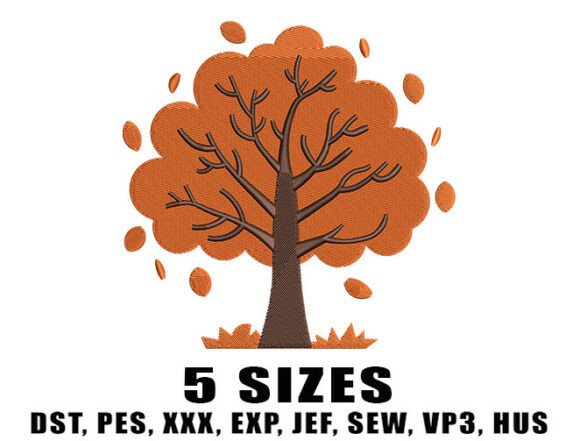
As an embroidery designer who’s built seasonal collections for over a decade, my first glance at the Autumn Tree Embroidery Design lands with quiet satisfaction. It’s not loud or overly ornate — it’s intentionally warm, grounded, and gently nostalgic. The big autumn tree anchors the composition, while falling leaves introduce motion and soft rhythm. This isn’t just foliage; it’s mood. It reads as cozy fall, not generic harvest. It leans rustic-elegant rather than cartoonish or kitschy — a critical distinction when designing for Thanksgiving, family gifting, and home decor buyers who value authenticity over cliché.
Real-World Seasonal Use: Where This Design Shines
I’ve already sketched out how the Autumn Tree Embroidery Design fits into this year’s limited-edition product drops. On heavyweight cotton sweatshirts? Yes — especially in Sizes 4 (6.8 inch) and 5 (7.8 inch), where the scale reads beautifully on chest or back placement. For tote bags and kitchen towels, Sizes 2 (4.8 inch) and 3 (5.8 inch) strike the ideal balance: large enough to command attention, detailed enough to hold interest up close, but not so dense that stitching drags on textured weaves.
Pillow covers and aprons benefit from the design’s organic flow — no sharp angles or rigid symmetry to fight against curved seams or fabric drape. And for baby items (burp cloths, onesies, quilt squares), I’d use Size 1 (3.8 inch) with simplified thread choices: matte cottons instead of high-sheen poly, softer stabilizer layers, and slightly reduced density if the file allows. As an embroidered patch? Absolutely — its self-contained shape and clear silhouette make it ideal for iron-on or sew-on applications on denim jackets or holiday stockings.
For Etsy sellers and small shop owners, this design is gift-ready *by nature*. Paired with warm-toned linen, kraft packaging, and a handwritten tag, it elevates a simple kitchen towel into a personalized gift. In mockups, it performs exceptionally well — clean lines translate clearly across printable promotional graphics and Instagram previews. No visual clutter means faster recognition, stronger brand consistency across your Thanksgiving collection, and higher perceived value without raising price points.
Where to Proceed With Intention
Not every surface is equal — and the Autumn Tree Embroidery Design reveals its limits most honestly on challenging substrates. On thick terry cloth towels, I recommend testing stitch density first: too much fill can flatten texture and cause puckering. Dark fabrics demand careful thread color selection — avoid light golds or pale yellows unless you’re layering underlay or using topping. Metallic thread? Beautiful in theory, but risky here: the leaf details may snag or break during stitching, especially at smaller sizes.
Stretchy garments like ribbed knits or curved caps require extra stabilization — consider cutaway + tear-away combo and slower machine speeds. And while the design feels generous in scale, don’t assume Size 1 (3.8 inch) will read clearly on tiny hoop placements like collar tips or ornament backs — always verify actual stitched output before committing to production runs. If your file includes fine veining or tight leaf clusters, inspect those areas post-stitch: they’re the first to blur on low-thread-count fabrics or with incorrect tension.
Emotional & Commercial Impact During Holiday Shopping
This is where the Autumn Tree Embroidery Design earns its place in your seasonal lineup. It doesn’t shout “Thanksgiving!” — it *invites* the feeling. That subtlety builds trust. Buyers scrolling Etsy or browsing craft fairs respond to warmth, not urgency. They associate this design with memory-making: baking pies, raking leaves, gathering around tables. That emotional resonance increases giftability — people buy it *for others*, not just for themselves.
It also supports brand consistency across categories. Use the same core palette (burnt umber, moss green, toasted ochre, cream) on sweatshirt embroidery, pillow covers, and embroidered patches — and customers instantly recognize your shop’s seasonal voice. That visual cohesion boosts engagement, encourages bundle purchases (“match the apron + towel + tote”), and makes social media content feel intentional, not scattered.
Practical Designer Notes Before You Stitch
- Test thread colors on both light and dark fabric — what reads as rich amber on ivory may vanish on charcoal without underlay or topping.
- Confirm stitch density before scaling — some files compress detail at smaller sizes, leading to muddy leaves or thin branches.
- Match hoop size to intended application: Size 5 (7.8 inch) needs a 8x12 hoop minimum; don’t force it into a 5x7 without checking compatibility.
- Choose stabilizer by fabric texture: lightweight cutaway for stable wovens, heavy cutaway for towels, fusible for appliqué-ready patches.
- Create realistic mockups — use actual fabric swatches, not just digital filters, to preview how leaf edges soften on terry or linen.
- Review small details after stitching: check leaf tips, branch ends, and negative space for stray stitches or nesting issues.
- Plan matching color palettes across your entire seasonal line — coordinate thread, packaging, and listing photos for cohesive storytelling.
- Verify commercial licensing before selling finished products — ensure your purchase includes rights for resale of handmade gifts and seasonal embroidery.
Finally: if exact stitch count, file format, or license terms aren’t stated in the product listing for Autumn Tree Embroidery Design, reach out to the seller *before* bulk ordering. A quick confirmation saves costly rework — especially when holiday timelines are tight and customer expectations run high.
Why This Belongs in Your Fall Collection
The Autumn Tree Embroidery Design works because it balances artistry with practicality. It’s festive without being fleeting, detailed without being demanding, and seasonal without locking you into one narrow holiday. Whether you're an Etsy seller launching a Thanksgiving capsule, a craft fair vendor building family-matching sets, or a small apparel decorator adding warmth to fall inventory — this is a versatile, emotionally intelligent machine embroidery design. It doesn’t just fill space. It holds meaning. And in seasonal selling, that’s the thread that truly holds.