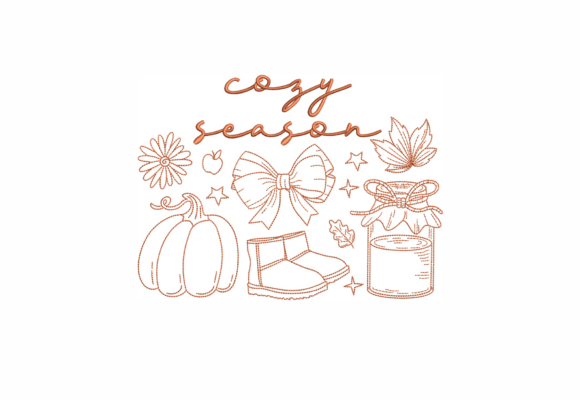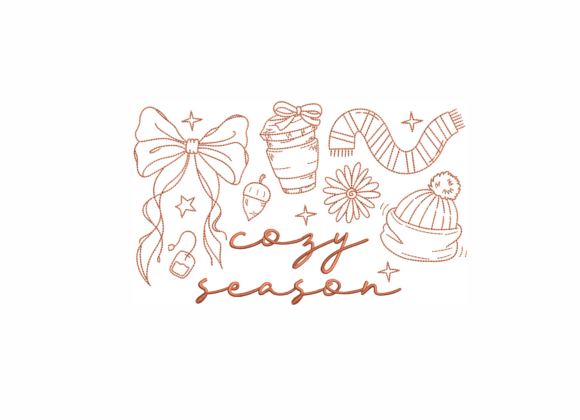
Cozy Season Redwork Embroidery Design
A Thoughtful Review for Small Business Merchandise & Branded Patches
As an embroidery designer who’s developed hundreds of commercial machine embroidery designs for cafés, boutiques, florists, bakeries, and handmade brands, I approached the Cozy Season Redwork Embroidery Design with a practical eye—not just for charm, but for real-world function. The title alone signals warmth and approachability, and the description—“Celebrate the cozy vibes of the cold season with this charming redwork embroidery design”—immediately sets a tone: friendly, nostalgic, and intentionally handmade. That’s valuable. In today’s market, small business owners don’t just want decoration—they want storytelling, consistency, and tactile authenticity. This design delivers that feeling at first glance.
First Impression: Rustic Charm Meets Commercial Flexibility
The Cozy Season Redwork Embroidery Design reads as classic redwork: clean outlines, minimal fill, and intentional negative space. With motifs like a warm hat, scarf, bow, hot drink, acorn, stars, and flowers, it avoids seasonal cliché while still anchoring firmly in Winter. It’s not overly sweet or cartoonish—making it equally viable for a modern florist launching holiday bundles or a pet brand releasing cozy winter bandanas. Its strength lies in its versatility: it feels handmade without sacrificing polish, rustic without looking unfinished, and decorative without overwhelming branding. For a small business seeking to reinforce a warm, community-focused identity, this design doesn’t shout—it invites.
Real-World Performance Across Merchandise Types
In practice, the Cozy Season Redwork Embroidery Design shines where subtlety and character matter most:
- Embroidered patches: Works beautifully as a sew-on or iron-on patch on tote bags, denim jackets, or staff aprons—its open-outline style translates cleanly at 2.5"–3.5" sizes.
- Apron embroidery: Ideal for chest placement on cotton or linen aprons—minimal stitch density means less stiffness and better drape, especially important for food service or craft studio staff.
- Cap embroidery: Best used on the back strap or side panel rather than the front crown, where curvature can distort fine lines; the hot drink and acorn elements hold up well at reduced scale.
- Tote bag design: Makes a memorable, low-density accent near the handle or lower corner—no risk of puckering on canvas or heavy cotton.
- Custom apparel: Perfect for sleeve cuffs or pocket corners on crewnecks and shirting—adds branded warmth without competing with logos or text.
- Product packaging accents: When stitched onto fabric tags, gift pouches, or reusable produce bags, it elevates perceived value for handmade product lines.
Because it leans into redwork’s traditional simplicity, the Cozy Season Redwork Embroidery Design also scales gracefully across digital uses—think printable mockups for Etsy listings or client presentations—where clarity and recognizability matter more than photorealism.
Where to Use It Thoughtfully (and Where to Pause)
Even strong designs have boundaries. Here’s where the Cozy Season Redwork Embroidery Design requires extra attention:
- Small patch sizes under 2": The bow and star details may blur; always test stitch a 1.75" version before bulk production.
- Curved surfaces like cap fronts or curved tote handles: Tight curves can stretch delicate outlines—consider simplifying or repositioning elements.
- Dark uniforms or textured fabric: Redwork relies on contrast. If stitching on charcoal wool or bouclé knit, verify thread color visibility—black or navy thread may be stronger than traditional red for legibility.
- Frequent washing: While redwork typically has lower stitch density (a plus for durability), always pair with tear-away + cut-away stabilizer combo on unstable fabrics like knits or lightweight cotton.
How It Strengthens Brand Identity & Customer Trust
For small businesses, every embroidered detail communicates intention. The Cozy Season Redwork Embroidery Design reinforces brand identity by signaling care, craftsmanship, and seasonal relevance—without saying a word. A bakery using it on staff aprons tells customers, “We bake with warmth.” A florist stitching it onto gift wrap sacks says, “Our arrangements are thoughtful, not transactional.” That emotional resonance builds trust faster than slogans ever could. It also supports visual consistency: when used alongside your logo on tote bags, caps, and packaging, it becomes a secondary signature—a recognizable motif that deepens recognition over time. And because it reads as authentically handmade, it enhances perceived value—especially for Etsy sellers and craft-based brands where “machine-made” often carries stigma unless balanced with artisan cues like redwork’s heritage aesthetic.
Practical Designer Notes Before You Stitch
Before deploying the Cozy Season Redwork Embroidery Design commercially, here’s my checklist—refined from years of client projects and production hiccups:
- Test it in black and white first—this reveals contrast issues and hidden density traps.
- Check how it renders at your smallest intended patch size (e.g., 2" x 2")—not just the default file size.
- Review thread color contrast against your base fabric—don’t assume red thread = best choice.
- Inspect spacing between elements—tight clusters (like scarf loops or flower stems) may need slight adjustment for dense fabrics.
- Confirm hoop size compatibility with your embroidery machine—some redwork files include multiple layout options.
- Test stitch on your actual fabric with proper stabilizer—linen behaves differently than twill, and fleece needs extra support.
- Create a printable mockup for client approval—visuals prevent misaligned expectations.
- Compare it beside your existing design assets—does it complement your logo, typography, and color palette?
- Verify commercial licensing—this is non-negotiable for small business merch, custom apparel, and resale items.
Remember: the Cozy Season Redwork Embroidery Design isn’t just a machine embroidery design—it’s a quiet ambassador for your brand. Used intentionally, it adds warmth to your customer experience, cohesion to your product line, and credibility to your handmade presentation. Whether you’re sourcing a digital embroidery file for your next batch of aprons or building a full small business merch system, this design earns its place—not because it’s trendy, but because it’s thoughtful, adaptable, and deeply human.