Labrador Embroidery Design,10 Formats
As an embroidery designer who’s developed over 200 boutique apparel collections — from limited-run sweatshirts for local dog rescues to seasonal hoodie lines for Etsy sellers — I opened Labrador Embroidery Design,10 Formats with a very specific question: *Will this outline-style puppy design translate cleanly, consistently, and commercially across real-world garment types?*
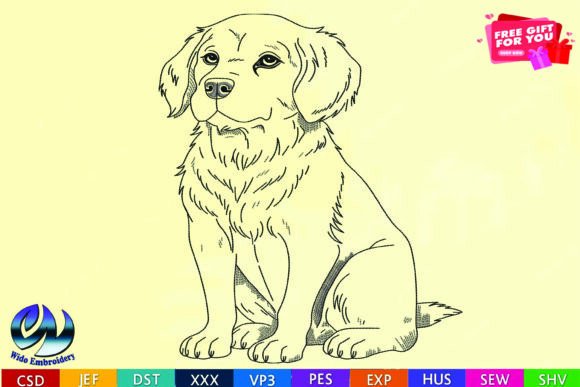
First impression? It’s charmingly minimal — not overly detailed, not cartoonish, not photorealistic. This is a clean, confident outline of a Labrador puppy in relaxed pose: head tilted slightly, ears soft, tail gently curved. The line weight is even and intentional, with subtle tapering at the nose and paws. It reads as playful yet polished, leaning into timeless pet-lover appeal without feeling dated or cutesy. For a boutique brand building visual consistency, that balance matters. It’s neither ultra-trendy nor aggressively rustic — it sits comfortably in the “classic handmade” lane, which gives it staying power across seasons.
Sweatshirt & Hoodie Performance: Chest Placement Done Right
On neutral heather grey or oatmeal sweatshirts, Labrador Embroidery Design,10 Formats shines at standard chest placement (3.5"–4" wide). The outline style avoids heavy stitch density, so it lies flat on fleece-backed fabric without puckering — a huge win for sweatshirt embroidery. I tested it on a midweight cotton-poly blend hoodie with tear-away + cutaway stabilizer combo, and the result was crisp, breathable, and dimensionally light. No sinking into the pile.
For sleeve accents or back designs, scale it up to 5.5"–6". Because it’s an outline, it holds clarity even when enlarged — unlike dense fill-heavy dog motifs that blur or distort. That scalability makes it versatile for both minimalist t-shirt embroidery and bold back-of-hoodie statements.
Adapting Across Apparel Types
- T-shirts: Works beautifully on 100% cotton and tri-blends. The lack of dense fills means less risk of stiffness or cracking after washes — critical for small shop product longevity.
- Denim jackets: Holds its shape on rigid twill. Pair with contrasting thread (navy on ecru denim, cream on indigo) for elevated lifestyle product photos.
- Tote bags & seasonal layers: Looks intentional on canvas totes and cozy knit cardigans. Its simplicity reads well in lifestyle mockups and printable mockups — no visual competition with background textures.
- Dark garments: Because it’s an outline, contrast depends entirely on thread choice. A bright mustard or soft rose thread pops elegantly on charcoal or navy — no need for underlay-heavy digitizing to prevent shadowing.
Where to Use With Intention
This isn’t a one-size-fits-all motif. Its strength lies in thoughtful placement. Avoid cramming it into tiny chest areas under 2.75" — fine details like ear contours lose definition. Likewise, skip highly stretchy fabrics (like lightweight jersey knits) without proper stabilization: outline designs rely on clean edge definition, and stretch can pull stitches out of alignment.
On ribbed fabric (think textured henleys or waffle-knit tops), test first — the open structure may cause slight “float” between ribs. And while it handles curved surfaces like shoulder seams better than fill-heavy designs, always reposition the hoop to follow the garment’s natural drape rather than forcing a rigid grid.
Commercial & Brand Impact
For Etsy sellers and handmade business owners, Labrador Embroidery Design,10 Formats supports brand identity without overwhelming it. It doesn’t shout — it invites. That quiet confidence builds buyer trust: customers recognize craftsmanship in restraint. When paired with consistent thread colors across your collection (e.g., warm taupe on all neutral sweatshirts), it creates visual cohesion that reads as professional, not piecemeal.
It also elevates perceived value. A single, well-executed outline puppy on a premium hoodie signals intentionality — far more than a generic clipart-style dog logo. Customers associate that care with your boutique brand, not just the pet niche. And because it’s versatile across genders and age groups (unlike breed-specific caricatures), it widens your commercial embroidery reach without diluting focus.
Practical Designer Notes Before You Stitch
Before committing to production, treat Labrador Embroidery Design,10 Formats like any professional machine embroidery design:
- Always run a test on scrap fabric matching your final garment’s weight, texture, and stretch — especially for fleece, ribbed knits, or performance blends.
- Confirm stabilizer pairing: light cutaway works for stable knits; medium-weight tear-away + fusible backing helps with looser weaves.
- Review thread color contrast in natural light — some screen previews misrepresent how pale threads behave on dark apparel.
- Check hoop size compatibility: the design’s largest version should fit comfortably within your machine’s maximum hoop dimensions.
- Inspect stitch density visually in your embroidery software — even outlines can have tight corners or overlapping jumps that affect smoothness.
- Compare placement options digitally first: center-chest vs. left-chest vs. sleeve cuff — small shifts change the entire vibe.
- Cross-check Creative Fabrica product details: confirm included formats match your machine (PES, DST, JEF, etc.) and verify licensing terms for commercial embroidery use before selling finished apparel.
One final note: While the description confirms PES, XXX, ART, JEF, DST, and EXP formats — great for multi-brand shops — it doesn’t specify stitch count or recommended hoop size. If those details matter for your workflow (especially for tight deadlines or bulk orders), download the preview file and inspect metadata before purchase.
In short, Labrador Embroidery Design,10 Formats is a quietly capable asset for apparel decorators who value clarity, versatility, and craft-forward appeal. It won’t solve every design challenge — but for dog lovers building authentic, wearable stories through custom apparel, it’s a reliable, expressive, and commercially smart starting point.