Spooky Goose Pumpkin Embroidery Design
A Designer’s First Look: Playful, Not Precious
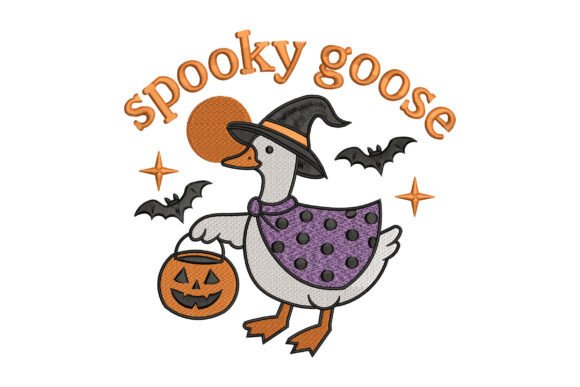
When I opened the Spooky Goose Pumpkin Embroidery Design file, my first thought wasn’t “cute” or “scary”—it was “relatable.” This isn’t a hyper-detailed, fussy Halloween motif. It’s a friendly, slightly lopsided goose perched on a plump pumpkin, with a winking eye and a crooked grin carved into the gourd. The shape reads instantly at 3–4 inches wide—ideal for a tote bag front, a sweatshirt chest placement, or a baby onesie above the waistband. There’s no cluttered background, no ornate borders, no tiny floating bats begging to vanish in the stitch. Just clean lines, intentional negative space, and a visual rhythm that feels handmade—not mass-produced.
Real-World Use: That Tote Bag Test
Last week, I prepped a batch of organic cotton tote bags for a local boutique’s Halloween pop-up. I chose the Spooky Goose Pumpkin Embroidery Design as the centerpiece—not because it’s trendy, but because it lands right: whimsical enough for kids’ gifts, clever enough for adults who roll their eyes at cliché skeletons, and scalable enough to hold up on a 15" x 15" canvas. I stitched it at 3.8" wide on medium-weight twill with tear-away stabilizer and standard 40-weight rayon thread. The result? Crisp satin-stitched beak and pumpkin stem, smooth fill-stitch body, and just enough running-stitch texture in the goose’s feathers to add depth without snagging. Customers picked up the bags immediately—not just for the holiday theme, but because the design felt intentional. No one asked, “What is that?” They smiled, pointed, and said, “Oh, the goose!” That kind of instant recognition is gold for a craft business or Etsy seller.
Where It Shines (and Where It Needs Care)
The Spooky Goose Pumpkin Embroidery Design thrives on stable, medium-to-heavy fabrics: denim aprons, fleece blankets, terry cloth tea towels, structured cap visors, and quilted pillow covers. Its balanced stitch density keeps it from puckering on cotton poplin or shrinking on pre-washed jersey—but I’d avoid it on ultra-thin voile or heavily textured burlap unless you’re using heavy cut-away stabilizer and reducing stitch speed.
- Small hoop sizes? Yes—works cleanly down to a 4" hoop if centered properly. Avoid cramming extra text or borders around it.
- Dark fabric? Absolutely. The design’s open shapes and moderate fill areas mean black or navy thread pops beautifully without overwhelming detail.
- Curved surfaces like caps? Keep it under 3.5" and use a low-profile cap frame. The rounded pumpkin base adapts well; the goose’s upright posture helps it read clearly even on a slight dome.
- Baby embroidery? Ideal—no sharp points, no tiny detached elements, and the cheerful spookiness avoids anything unsettling for nurseries or newborn photos.
What It Does for Your Brand—and Your Buyers
This isn’t just another Halloween embroidery file. It’s a quiet trust-builder. When a customer sees the Spooky Goose Pumpkin Embroidery Design on your Etsy listing or boutique shelf, they’re subconsciously registering care: care in curation, care in execution, care in knowing when simplicity reads louder than spectacle. That translates directly to perceived value. A personalized sweatshirt with this design feels more like a thoughtful gift than a seasonal afterthought. For small shop owners, it strengthens brand consistency—especially if you pair it with other light-hearted, well-executed designs (think matching tea towel + patch + onesie sets). And for digital product sellers? It’s highly mockup-friendly. Drop it into a printable mockup on a cream linen tote or charcoal hoodie, and it reads as professional—not “designed in five minutes.”
Practical Designer Notes Before You Stitch
Before committing to production—or uploading to your shop—run these checks:
- Test on scrap fabric that matches your final product (e.g., brushed cotton for sweatshirts, terry for towels).
- Review stitch density in your embroidery software. If fill areas look overly dense, reduce density by 5–10% for breathable fabrics.
- Confirm hoop size compatibility—some versions may include multiple sizes; choose the one that fits your machine’s largest common hoop without scaling.
- Inspect small details: the goose’s eye, the pumpkin’s grin, and the stem’s curve should all resolve cleanly at your target size. If they blur or feather, go up one size increment.
- Try black-and-white mockups to assess contrast—especially important if selling digital embroidery files for others to use.
- Use proper stabilizer: medium tear-away for stable fabrics, cut-away for knits or lightweight weaves.
- Check licensing before selling finished products or reselling the digital embroidery file. The description says it’s “perfect for Halloween-themed decor, clothing, tote bags, and gift”—but confirm whether commercial use is explicitly permitted.
Final Thought: A Design That Serves the Maker
The Spooky Goose Pumpkin Embroidery Design doesn’t ask for special treatment. It doesn’t need custom thread blends or triple-layer stabilizing. It works with what most embroidery designers already have: a reliable machine, decent thread, and good judgment. That’s rare—and valuable. Whether you’re stitching a single personalized gift or producing fifty embroidered patches for a craft fair, this design supports your process instead of complicating it. It’s not trying to be everything. It’s just doing one thing very well: delivering warm, witty, wearable Halloween charm—stitch by confident stitch.