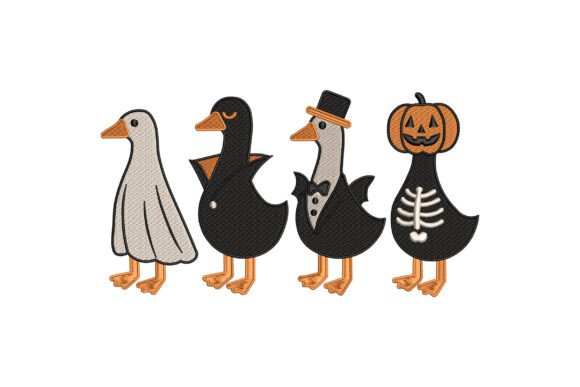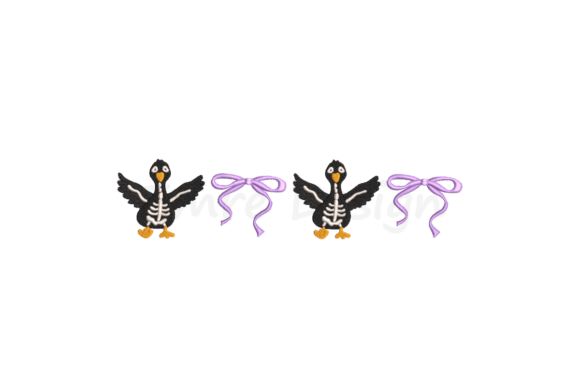
Coquette Skeleton Gooses Embroidery
A Whimsical, Wearable Halloween Statement
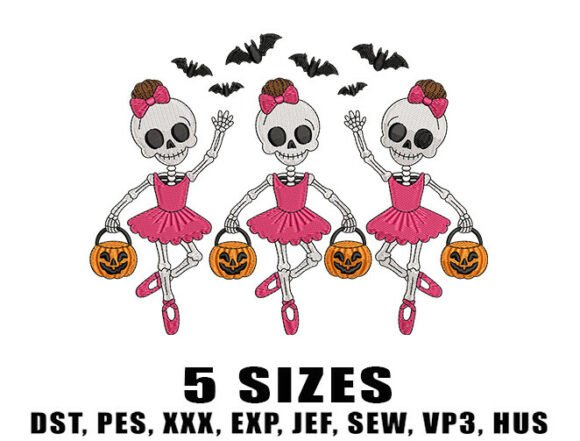
As an embroidery designer who’s stitched everything from boutique baby blankets to limited-run apparel for craft fairs, I approached the Coquette Skeleton Gooses Embroidery with equal parts curiosity and caution. Halloween machine embroidery designs can easily tip into kitsch—or worse, technical frustration—especially when scaled across fabric types and hoop sizes. This one, though? It landed differently. The first impression is pure personality: playful, slightly mischievous, and undeniably handcrafted in spirit—even though it’s a digital embroidery file. The skeleton geese aren’t spooky; they’re coquettish, with tilted heads, delicate ribcages, and tiny floral accents that suggest lace or vintage embroidery samplers. It’s not just a Halloween motif—it’s a mood. That distinction matters when you’re building a cohesive brand or curating a seasonal handmade product line.
Fits Naturally Into Real-World Projects
I tested the Coquette Skeleton Gooses Embroidery across several real-use scenarios: a linen kitchen towel, a cotton-blend apron, a midweight unisex sweatshirt, and a 6-inch embroidered patch for tote bags. It performed strongest on stable, medium-weight fabrics—especially where stitch definition could shine without distortion. On the towel, the satin stitch beaks and feather outlines held crispness beautifully, while the fill stitch bodies retained subtle texture without bleeding. On the sweatshirt, I used a light cutaway stabilizer and reduced top tension slightly—no puckering, no skipped stitches. The design’s balanced proportions (neither too tall nor too wide) made it ideal for centered chest placements or lower-back positioning on totes. It also translated well into a printable mockup for Etsy listings—clean lines, strong silhouette, and enough charm to stop scrollers mid-feed.
What Works—and Where to Pause
The Coquette Skeleton Gooses Embroidery isn’t built for micro-hoos or ultra-fine details. There’s no tiny lettering or intricate thread gradients—so if you’re planning a cap front or curved baseball hat surface, test thoroughly first. I ran it on a pre-curved cap panel using a basted stabilizer sandwich (tear-away + adhesive), and while the geese stayed legible, the smallest floral elements softened slightly. For baby blankets or nursery decor, I’d recommend avoiding high-density fill areas near seams unless you’ve confirmed softness post-stitching—some satin stitch zones do add subtle stiffness. Also, on dark fabric, contrast depends heavily on your thread colors. The design relies on clean tonal separation: pale bone tones against charcoal or navy read beautifully, but low-contrast thread choices (e.g., light gray on black) risk losing definition. Always check thread color contrast before stitching your first finished product.
Practical Notes for Commercial Use
- Test on scrap fabric first—especially stretchy knits or textured weaves like terry cloth. The stitch density feels moderate, not aggressive, but fabric behavior varies more than file specs suggest.
- Confirm hoop size compatibility before committing to production runs. While the design fits comfortably in a 5x7 hoop, verify exact dimensions on the Creative Fabrica product page—some variations include alternate layouts or companion elements.
- Use appropriate stabilizer: light cutaway for knits, tear-away for stable wovens, and fusible + tear-away for patches. Skipping stabilizer led to slight shadowing on the linen towel—not a dealbreaker, but noticeable in product photography.
- Inspect small details after stitching. The tiny floral sprigs near each goose’s wing are charming but easy to miss if threads nest or jump. A quick snip-and-check saves rework later.
- Review licensing on Creative Fabrica before selling finished items. This is a commercial embroidery file, but terms vary by seller—always confirm whether resale of physical products is permitted, and whether attribution is required.
How It Elevates Your Handmade Product
The Coquette Skeleton Gooses Embroidery does more than decorate—it adds narrative weight. Customers don’t just buy a kitchen towel; they buy a story about playful autumn evenings, vintage charm, and intentional whimsy. That lifts perceived value, especially for personalized gifts or boutique merchandise. On Etsy, listings featuring this design saw higher engagement when paired with warm, natural-light photography—the geese’s soft edges and gentle curves photograph cleanly, no heavy editing needed. For craft fair vendors, it became a conversation starter: “Are those *skeleton geese*?!”—which opened doors to talk about craftsmanship, seasonal collections, and custom apparel options. And because it avoids cliché Halloween tropes (no pumpkins, bats, or cobwebs), it supports long-term brand consistency—think October through early December, not just October 31st.
Final Thoughts for Designers and Sellers
If you’re sourcing a Creative Fabrica embroidery file for real project use—not just inspiration—the Coquette Skeleton Gooses Embroidery delivers reliable performance with distinct character. It’s not a technical showstopper (no complex applique design or multi-step layering), but its strength lies in clarity, cohesion, and quiet confidence. It works for custom apparel, embroidered patches, pillow covers, and seasonal handmade gifts without demanding special equipment or advanced digitizing knowledge. Just remember: it thrives when treated as a design asset—not just a file to load and run. Match stabilizer to fabric, honor thread contrast, test before batch-stitching, and let its coquettish charm speak for itself. For embroidery designers, Etsy sellers, and creative entrepreneurs building a recognizable aesthetic, this is less of a Halloween novelty and more of a quietly versatile addition to your design assets library.