Panda Lover Embroidery Design
First Impression: Soft, Sweet, and Instantly Recognizable
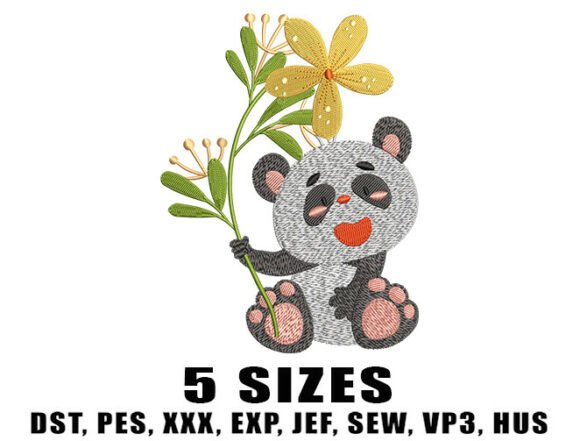
As an embroidery designer who’s prepped over 200 craft fair booths, my first glance at Panda Lover Embroidery Design tells me everything I need to know before stitching a single thread: this is a soft-spring, nursery-ready charm. The description — “charming panda holding a yellow flower” — evokes gentle whimsy, not cartoon loudness or minimalist austerity. It lands squarely in the sweet spot between cute and calm: think baby shower gifts, Easter market tables, and boutique baby boutiques. It’s not rustic, not edgy, not vintage — it’s tender, intentional, and commercially warm. That matters immensely when your booth has 30 seconds to capture a customer’s eye.
Where Panda Lover Embroidery Design Shines on Craft Fair Products
This design thrives where handmade warmth meets quiet storytelling. On a linen tea towel? Absolutely — the panda’s round face and simple flower read clearly even from three feet away, and the yellow bloom pops against natural fibers. As an apron embroidery centered above the pocket? Yes — its balanced proportions scale beautifully at Sizes 3 (5.8”) and 4 (6.8”), giving just enough presence without overwhelming the garment. As a stitch-dense embroidered patch? Strong contender — especially at Size 2 (4.8”) or Size 3, where the panda’s features stay crisp and the flower retains shape without excessive fill.
For tote bag design, go with Size 4 or 5 — large enough to anchor the front panel but still refined, not cartoonish. On small pouches or pillow covers? Size 2 is ideal: legible, proportional, and production-friendly. And for caps? Proceed with caution — the curved surface flattens fine details, so only use Size 3 or larger *if* the flower and panda’s facial elements are simplified in the file. Always test on scrap fabric first.
What Makes This a Smart Craft Fair & Etsy Seller Choice
Panda Lover Embroidery Design works hard for small shop owners because it’s instantly understandable. No decoding needed — “panda + flower = gentle, joyful, nature-adjacent.” That clarity translates directly to faster buyer decisions at crowded markets and higher click-throughs on Etsy listings. It photographs exceptionally well: soft shadows, clean outlines, and a built-in color cue (yellow flower) that guides your thread palette and product staging.
It also scales cleanly across five sizes — a major win for batch production. You can stitch Size 1 on a onesie bib, Size 3 on a tea towel, and Size 5 on a market bag — all from one digital embroidery file. That consistency builds brand trust across your handmade product line. Plus, its nursery-aligned mood pairs seamlessly with other spring or baby-themed design assets, making cross-promotion effortless.
Practical Production Notes Every Embroidery Designer Should Check
Before committing to 50 tote bags or listing on Etsy, run these checks:
- Test the design on scrap fabric — especially if using textured towels or thick cotton canvas. Dense stitch areas around the panda’s ears or flower center may pucker without proper stabilizer.
- Verify thread contrast — yellow flower threads must pop on light fabrics, but may disappear on cream or oat-colored linens. Consider goldenrod or buttercup instead of lemon yellow for better visibility.
- Review spacing and stitch density — if the flower stem or panda’s fingers are too thin, they’ll vanish on dark fabric or low-thread-count cotton. Confirm those elements hold up at Size 1 (3.8”).
- Confirm hoop size compatibility — Size 5 (7.8”) likely requires a 8x12” or larger hoop. If you’re limited to 5x7”, stick to Sizes 1–3.
- Use cutaway or tear-away stabilizer appropriately — lightweight cutaway for knits or stretchy baby fabrics; medium tear-away for tea towels and quilting cotton.
- Create at least one real mockup — not just a printable mockup. See how it drapes on a finished tote, how light hits the stitches on an apron, how the yellow reads next to your booth’s signage.
- Compare fabric colors side-by-side — a pale gray linen may mute the panda’s black accents, while ivory cotton enhances contrast. Don’t assume — test.
- Confirm commercial licensing — since this is intended for finished product resale (not just personal use), ensure your purchase includes rights for commercial embroidery and small shop distribution.
Design Limitations to Respect — Not Avoid
This isn’t a high-detail portrait — and that’s its strength. But respect its boundaries: avoid shrinking below Size 1 (3.8”) for any product. Tiny eyes, narrow stems, or tight petal clusters will lose definition and look muddy on dark fabric or textured surfaces. Likewise, don’t force it onto heavily curved cap fronts without verifying the digitizing accommodates distortion — many machine embroidery design files aren’t optimized for headwear.
Also note: “Panda With Flower” implies simplicity, not realism. If your customers expect ultra-fine fur texture or gradient shading, this isn’t the design. But if they value clean lines, cheerful intent, and fast-turnaround craft fair product development? It delivers.
Final Verdict: A Booth-Ready, Buyer-Approved Staple
Panda Lover Embroidery Design earns its place in my core rotation for spring markets and nursery-focused shops. It balances emotional appeal with production practicality — rare in today’s oversaturated digital embroidery landscape. It elevates a plain tea towel into a giftable handmade item. It turns a basic cotton pouch into a memorable baby shower keepsake. And it gives your booth visual breathing room: soft enough to soothe, distinct enough to stand out.
For Etsy sellers building cohesive collections, for Cricut crafters adding stitched accents, for boutique makers curating seasonal drops — this is more than a digital embroidery file. It’s a ready-made story, a consistent tone, and a reliable seller. Just remember: let the design breathe, honor its scale limits, and always — always — stitch a real sample before the fair opens.